


Hey, just so you know, some of the links on this site are affiliate links. That means I may earn a small commission if you buy something through them. It doesn’t cost you anything extra, and it helps me keep this site running. Thanks for your support!
Bangkok rewards digital nomads who choose a neighborhood around transit and daily routines instead of chasing the most famous address. The city is enormous, traffic can turn short distances into long trips, and the best base for one remote worker can be a poor fit for another. Start with the rail lines you will actually use, then compare noise, walkability, apartment quality, groceries and backup work options within that smaller radius.
This guide focuses on how to build a workable first month in Bangkok: which neighborhood types suit different routines, how to use BTS and MRT as anchors, how to verify an apartment for real work, and how to avoid spending half your day moving across the city.
Start with transit, not a neighborhood ranking
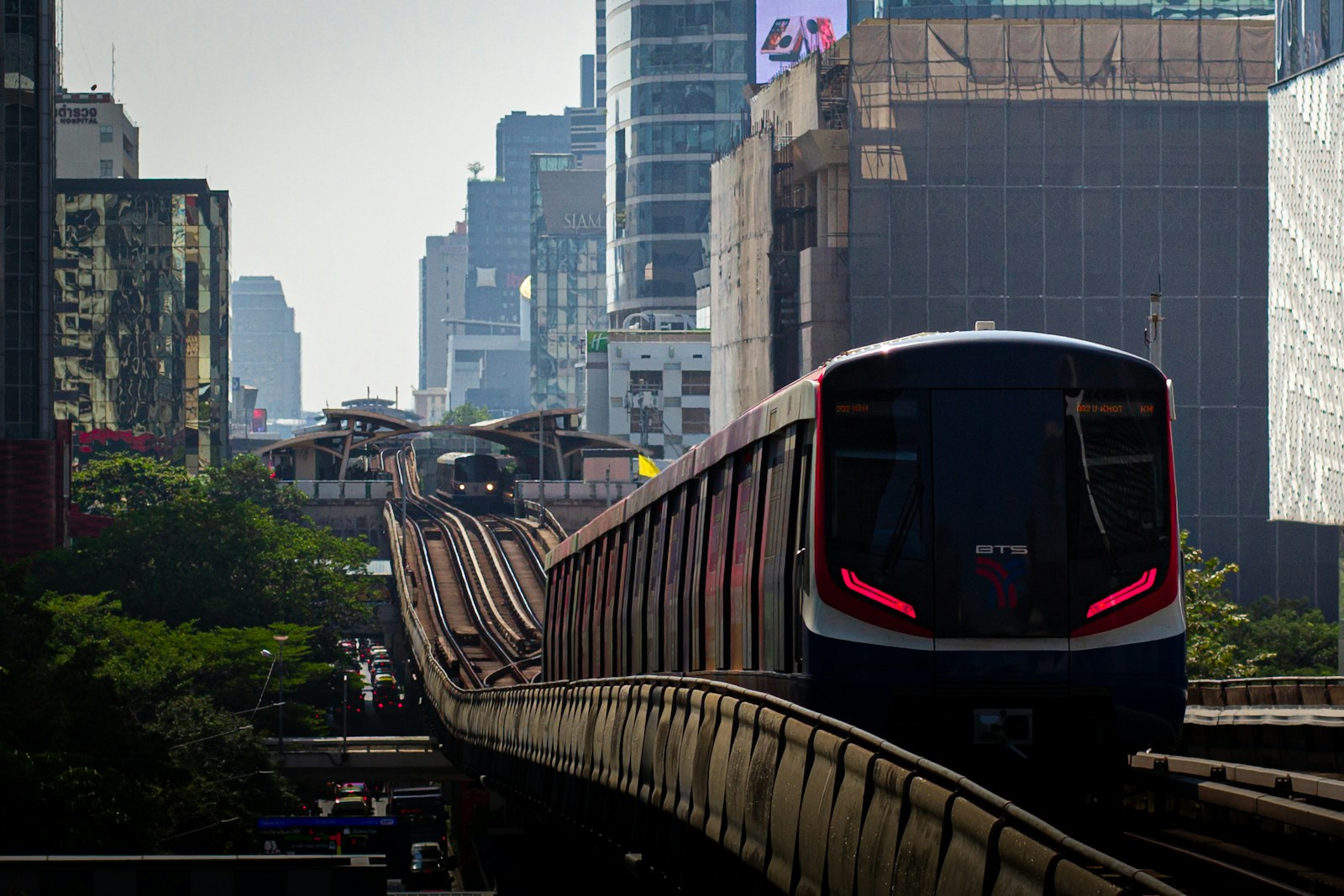
Bangkok’s BTS Skytrain and MRT systems are the simplest way to make a huge city feel manageable. BTS lists service hours from 5:00 a.m. to 1:00 a.m., with first and last train details varying by station and direction. That does not mean every apartment near “the BTS” is equally convenient: a 15-minute walk in midday heat or across a difficult road can feel very different from a five-minute walk with groceries.
Before booking, map three trips: your airport connection, your most likely leisure or meeting area, and a backup place to work. If all three require multiple transfers or long ride-hailing trips, the apartment may be cheap for a reason.
Asok and Phrom Phong: maximum central convenience
The Sukhumvit corridor around Asok and Phrom Phong is useful for travelers who want dense restaurants, shopping, transit and international services nearby. Asok’s major advantage is the BTS/MRT interchange: it gives you access to two rail systems without starting every trip in traffic.
The tradeoff is intensity. Busy roads, nightlife and premium towers can make the area feel less relaxed than a neighborhood farther from the commercial core. If you take calls from home, inspect the unit’s sound isolation and the exact side of the building, not just the tower’s location.
Ari: a calmer neighborhood rhythm with BTS access
Ari is a strong option for people who prefer a neighborhood feel without giving up rail access. The Tourism Authority of Thailand describes Ari as a contemporary community area combining older residences with shops, restaurants and cafes and notes its easy BTS access.
That makes it appealing for a one-month routine: you can work, eat and handle daily errands locally, then use BTS when you want the rest of the city. The key is to stay close enough to the station that you actually use it. “Ari area” can cover more ground in a listing than it does in your legs.
Silom and Sathorn: useful for business-oriented stays
Silom and Sathorn suit travelers who want access to Bangkok’s central business districts and a mix of BTS and MRT connections. They can be especially practical if your remote work occasionally becomes in-person meetings, conferences or professional networking.
Check the street itself before committing. A tower can be close to transit on a map but separated by wide roads, office traffic or an awkward walk. In Bangkok, the last 500 meters often matter as much as the rail line.
On Nut and farther east: useful when you want a more residential base
Moving farther east along Sukhumvit can provide a more residential day-to-day feel while keeping BTS access. This works well for people who do not need to be in the center every day and would rather spend their time in one neighborhood than commute across Bangkok for meals and errands.
The decision test is simple: count how many days per week you expect to travel into central Bangkok. If it is one or two, a farther-out base may be easy. If it is every day, the commute becomes part of the cost even when the rent does not show it.
Vet the apartment as a workplace
Ask for a recent internet test from inside the unit and confirm whether the router belongs to your apartment. Look at the desk in the photos critically: many listings call a small console table a workspace. If you need a second monitor, video calls or several hours of focused work, dimensions and chair comfort matter.
- Confirm fixed internet provider and plan type.
- Ask whether the building has frequent maintenance outages.
- Check mobile signal inside the unit as a backup.
- Test air-conditioning in the room where you will work.
- Visit or video-call the unit at the time of day when surrounding noise is highest.
- Confirm building access, parcel delivery and guest rules if they affect your routine.
Build a Bangkok workday that avoids unnecessary crossings
A common first-week mistake is treating every meal, gym session, cafe and social plan as a reason to cross the city. Instead, build a 15-minute daily-life radius around your apartment. Put your normal breakfast, groceries, laundry, gym, pharmacy and at least one backup work location inside that radius when possible.
Then use the rail network for deliberate trips: a meeting, museum, night market, river day or dinner in another district. Bangkok becomes much easier when “exploring the city” is something you choose rather than something your basic errands force you to do.
Keep a two-layer connectivity plan
Your apartment connection should be layer one. Mobile data should be layer two. Test the mobile connection inside the apartment, not only on the street. If you run high-stakes calls, know a nearby hotel lobby, coworking venue or cafe that can serve as a third option.
Do not wait for the first outage to find out that your backup SIM has no signal in the bedroom or that the nearest “coworking space” closes before your U.S.-time-zone meeting begins.
Match your stay permission to the length of your plan
Thailand’s Destination Thailand Visa includes a workcation category for digital nomads, remote workers and freelancers. The Royal Thai Embassy in Washington updated its guidance in September 2026, including financial-evidence and professional-status requirements for applicants in that jurisdiction. Other visa-exemption and visa categories may also apply depending on nationality and trip purpose.
Use the official Thai e-Visa portal and your responsible embassy or consulate for the current rules. For the workcation route, our Thailand DTV guide for digital nomads walks through the 2026 requirements. Immigration permission and tax obligations are separate questions, so get professional advice for longer or more complex stays.
Your first 72 hours in Bangkok
- Test apartment Wi-Fi and mobile backup from your desk.
- Walk the route to your nearest BTS or MRT station in daytime and after dark.
- Locate groceries, pharmacy, ATM and laundry.
- Run one normal work block before committing to a longer rental.
- Save your building name and address in Thai for taxis and deliveries.
- Take one rail trip during peak hours so you understand the real commute.
- Choose one neighborhood ritual—a cafe, park, food market or gym—that gives the month some routine.
Bottom line
Bangkok is not a city where the “best neighborhood” can be separated from your calendar. Asok may be perfect for a transit-heavy month, Ari for a more neighborhood-centered routine, Silom/Sathorn for business access, and farther-out Sukhumvit for someone who rarely needs the center. Anchor the decision to rail, verify the apartment as a workplace, and minimize repeated cross-city trips. That is how Bangkok becomes a base instead of a commute.