

Hey, just so you know, some of the links on this site are affiliate links. That means I may earn a small commission if you buy something through them. It doesn’t cost you anything extra, and it helps me keep this site running. Thanks for your support!
If you are visiting Bohol to see tarsiers, the animal’s welfare should control the experience—not the quality of your photograph. The Philippine Tarsier Sanctuary in Corella is presented by Bohol’s provincial tourism office as a conservation-oriented location where visitors can view these exceptionally sensitive primates. Quiet behavior, limited disturbance and following trained guides matter more than close-up access.
This guide explains what to ask a wildlife operator, how to behave around tarsiers and how to fit a responsible visit into a wider Bohol itinerary. Wildlife conditions and local visitor rules can change, so confirm the sanctuary’s current instructions before traveling.
Why the tarsier encounter requires a different mindset
Tarsiers are small, nocturnal primates. The Bohol tourism office explains that tarsiers are sensitive to disturbance and instructs visitors to keep noise low and avoid camera flash. Treat these as nonnegotiable welfare expectations rather than optional rules for getting a better photo.
Do not touch, feed, hold or position a tarsier. Do not pressure a guide to wake an animal, clear branches or move closer to secure an image. A responsible encounter may involve observing a resting animal quietly from a distance, and that should be considered a successful visit.
What is the Philippine Tarsier Sanctuary in Corella?
The provincial government’s tourism site identifies the Philippine Tarsier Sanctuary in Corella as a forest-based ecotourism destination with conservation goals. Rather than assuming every venue advertising a “tarsier experience” follows equivalent practices, research the specific facility, its managing organization, visitor limits and treatment of animals.
If a business advertises handling, selfie poses or guaranteed interaction with a nocturnal primate, question whether it is aligned with welfare standards. Conservation tourism does not need to stage an encounter with distressed animals to create value.
How to behave on the trail
- Listen to the guide’s briefing and follow group size or distance limits.
- Keep voices low and silence noisy notifications.
- Never use flash photography, strong lamps or bright phone lights directed at wildlife.
- Remain on the designated paths and protect vegetation.
- Avoid touching, feeding or attempting to attract an animal.
- Do not reveal sensitive wildlife locations in a way that encourages unmanaged approaches.
- Leave if the experience appears to stress the animals or violate posted rules.
Photographs are optional, conservation is not
Low light and vegetation may make photographs difficult. That is normal. Better camera equipment or long lenses do not entitle a visitor to move beyond a permitted viewing point. An experience can be memorable even if no perfect image comes home with you.
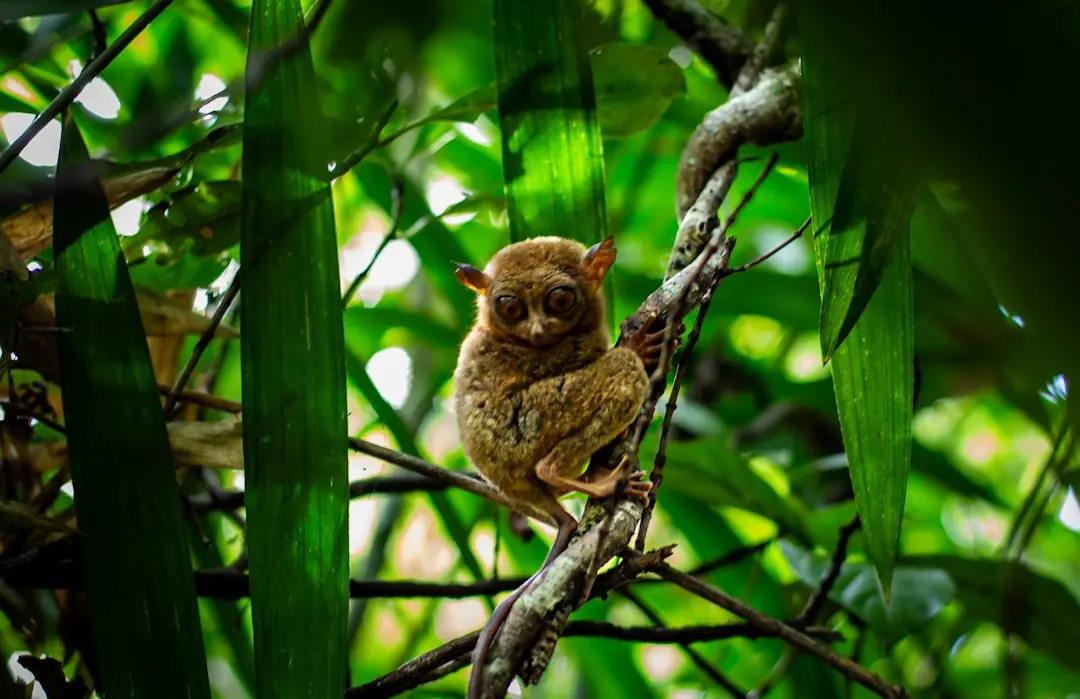
The featured photograph in this guide is illustrative of a tarsier and is not represented as documentary proof of an animal photographed at Corella. Use official sanctuary images or your own responsibly captured photographs when documenting the actual location.
Check the operator before booking
| Question | Promising answer | Concern |
|---|---|---|
| Are the animals handled? | No handling or forced contact | Visitors can hold animals for selfies |
| Is flash allowed? | Prohibited in sensitive viewing areas | Flash photography is encouraged |
| Who guides visitors? | Trained guides operating under posted rules | No consistent supervision |
| What happens if no animal is visible? | Visitors accept wildlife’s natural behavior | Staff move or disturb animals to guarantee views |
| What supports conservation? | Clear management and conservation activity | Only marketing claims and staged photos |
Combining Corella with Bohol’s other sights
A countryside day may pair a sanctuary visit with a few scenic or cultural stops, depending on your starting point and the road route. The Chocolate Hills are another well-known Bohol landscape, but trying to cover every attraction on the island in a day can produce unnecessary driving and rushed visits.
Our Cebu and Bohol seven-day itinerary demonstrates why a transfer day should be separate from a full countryside day. Treat wildlife viewing as a calm, short component with flexibility for the animals and the staff.
Wildlife ethics extend beyond tarsiers
Bohol’s government announced updated marine wildlife interaction rules in 2026 prioritizing conservation, including restrictions on feeding, touching and harassing marine wildlife. That policy applies to marine encounters rather than directly establishing tarsier sanctuary rules, but it reflects a useful broader principle: wildlife does not exist to guarantee tourist interaction.
Before booking any whale-shark, turtle, dolphin or reef trip, ask about the actual local operator permits and distance or contact requirements. See the provincial marine-wildlife announcement for those separate rules.
Prepare a wildlife-friendly day bag
Bring water, appropriate footwear, weather protection and a camera you can operate without flash. Keep food packed away around the animals. A small backpack is useful, but avoid noisy equipment and unnecessary gear. Travel insurance and reliable transport are more important than buying specialist photography accessories for a single short visit.
Signs that an attraction should be avoided
Be cautious when a venue promises close-contact selfies with tarsiers, encourages bright lights in resting areas or treats animals as props that can be moved for guests. A wildlife operator may have an attractive website and friendly staff while still relying on questionable practices. Ask how it prevents crowding, what staff do if animals show stress, and whether guests ever handle them. If the answers are vague, choose a different experience.
It is reasonable to leave without getting a photograph. The purpose of a protected environment is not to guarantee a visible tarsier every hour; it is to conserve its habitat. A responsible guide may shorten or alter a viewing session for animal welfare. That is a sign of an appropriately managed nature activity, not a customer-service failure.
How to plan around weather and visitor flow
Ask the sanctuary about its current visiting hours and whether advance arrangements or group limits apply. Weather can affect forest trails and transport, so allow schedule flexibility. Keep your itinerary light enough that you will not pressure a guide to hurry through conservation instructions in order to reach another attraction. If conditions are unsuitable, a museum or other cultural activity is a better alternative than insisting on access.
How to support local conservation
Where possible, pay the authorized operator directly, respect access fees and follow visitor limits. Ask about conservation and local community benefits, but do not assume that every high ticket price guarantees ethical management. Credibility comes from specific practices, not glossy advertising.
Bottom line
The best Bohol tarsier visit is one where the animals are not disturbed by your presence. Choose a reputable conservation setting, follow quiet no-flash viewing rules and make the experience about learning rather than handling wildlife.