

Hey, just so you know, some of the links on this site are affiliate links. That means I may earn a small commission if you buy something through them. It doesn’t cost you anything extra, and it helps me keep this site running. Thanks for your support!
Three days in Bohol can combine its famous Chocolate Hills, sensitive tarsier habitat and time on Panglao’s coast—if the journey is organized around geography and animal welfare. The island is larger than a postcard suggests. A countryside road trip, coastal activity and inter-island transfer are three different kinds of day, each requiring practical buffers.
This guide assumes you arrive in Bohol with enough time for three useful days. It avoids promising exact ferry departures or wildlife sightings. Official tourism materials identify Panglao’s beaches and heritage sights and the Chocolate Hills as important experiences; individual visitor access changes with weather and local policies.
The three-day outline
| Day | Main focus | Travel priority |
|---|---|---|
| 1 | Arrival, Panglao or Tagbilaran base | Check in, arrange transport and recover |
| 2 | Chocolate Hills and countryside choices | Group geographically, don’t overpack |
| 3 | Panglao coastline and flexible departure | Respect sea/weather conditions and connection times |
Day 1: confirm your actual arrival point
Bohol can be reached by routes involving its airport and ports, but the operator, ferry schedule and terminal depend on your travel dates and origin. Book lodging in a location that supports your next two days rather than choosing simply the lowest nightly rate.
Panglao may suit someone prioritizing coastal evenings, while a base nearer Tagbilaran can support other transport logistics. Compare where you will collect a driver, how long your countryside loop will take and whether you need an early departure. Leave room for food, recovery and checking tomorrow’s arrangements.
Panglao is more than a generic beach stop
The Bohol provincial tourism office highlights beaches including Alona, Dumaluan, Doljo and Libaong and cultural places such as St. Augustine Parish Church and Panglao Watchtower. These are not all identical experiences or a single continuous walking route.
Choose the coastline that fits your accommodation and desired activity. Public access conditions, swimming safety, facilities and crowd levels may differ, so verify locally before arriving. In the evening, keep a return plan rather than improvising transport from an unfamiliar beach.
Day 2: the Chocolate Hills countryside circuit
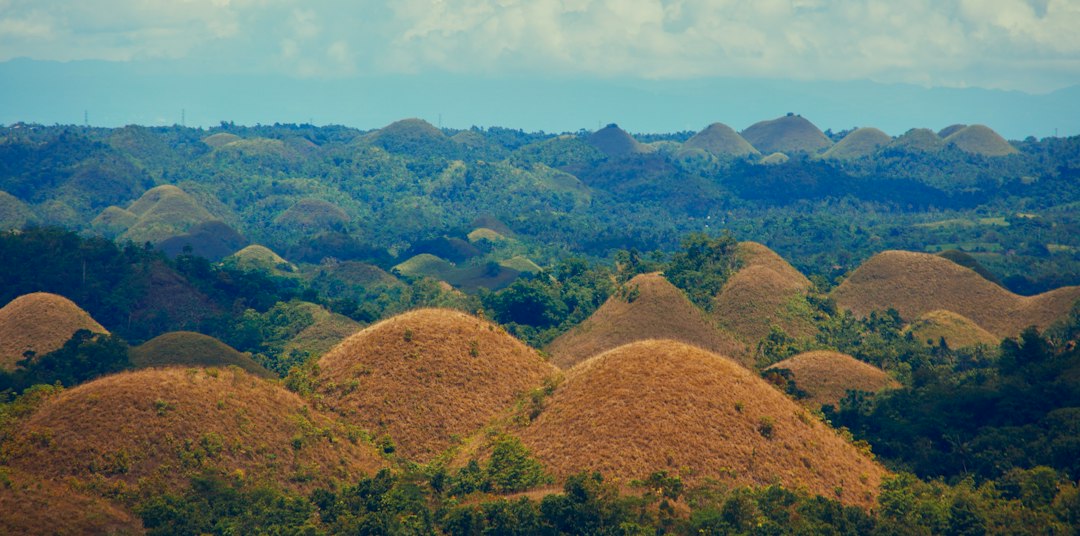
The Chocolate Hills form a remarkable landscape of rounded limestone hills. Their brown appearance is seasonal; it is normal for the hills to look greener at other times. Start with the official destination information to understand the geological and cultural importance of the area, then check the current viewpoint, access and entry conditions.
The biggest practical mistake is trying to add every countryside attraction to one drive. Build a loop with the Chocolate Hills, perhaps a carefully chosen cultural stop and, if appropriately organized, a conservation-focused tarsier viewing experience. Keep a lunch and weather buffer, and ask the driver to explain realistic timing.
How to see tarsiers responsibly
These small nocturnal primates can be distressed by noise, bright lights or handling. The Bohol tourism office identifies the Philippine Tarsier Sanctuary in Corella and advises quiet behavior, no flash and respect for the animals. Choose a legitimate operator, stay on designated paths and never touch or try to wake a tarsier.
Our Bohol tarsier sanctuary guidecontains a full welfare checklist. A venue that advertises holding tarsiers for selfies should be questioned rather than rewarded. Not seeing an animal close enough for a photograph is an acceptable outcome of ethical wildlife travel.
Pick additional stops based on meaning, not numbers
Bohol’s cultural and natural attractions include historic churches, river settings and local communities. A guided experience can add context, especially when traveling with people who would otherwise know only the landscape’s name. Ask whether the itinerary includes meaningful interpretation, how much time is allocated and whether tourism fees support legitimate operators.
Skip an attraction if its animal welfare practices are questionable, or if the detour creates an unsafe schedule. That decision improves the trip, even if it reduces the number of pins on your map.
Day 3: Panglao at a realistic pace
Use the final day for a beach, a culturally interesting stop or an optional water activity that matches your confidence and the conditions. If snorkeling or diving, confirm operator credentials, environmental policies, safety equipment and sea conditions. Never treat reef wildlife as something to feed or touch for a photo.
When you have an afternoon flight or ferry, do not schedule a distant boat activity with no backup. Keep return and check-in buffers. If departure logistics are complex, spend the final morning near your lodging rather than trying to maximize sightseeing minutes.
Should you rent a vehicle or use a driver?
Compare legal requirements, familiarity with local roads, insurance, total costs and the value of local knowledge. A trusted driver or licensed guide can make sense for a countryside loop involving separated sights, but verify license, vehicle suitability, inclusions, cancellation terms and realistic working hours.
For an independent trip, save offline maps, a fuel and parking plan and emergency numbers. Bohol is not a destination where a short distance on a tourist map always means a quick transfer.
Budget the whole three-day stay
| Expense | Verify |
|---|---|
| Accommodation | Location, fees, taxes, cancellation |
| Countryside travel | Driver or vehicle, fuel, entrance charges, guide |
| Coastal activity | Operator, equipment, weather refund |
| Food and data | Meals, mobile service, ordinary errands |
| Transport connections | Airport/port transfer plus delay contingency |
Use actual quotes and the operators’ current schedules instead of taking an old social-media estimate as a guaranteed budget.
How this fits a longer Philippines trip
Three Bohol days can fit into a wider Cebu-and-Bohol journey if transfer days receive their own space. Our seven-day Cebu and Bohol routeshows how to distribute the trip without making every morning a departure day.
Common mistakes to avoid
- Scheduling the Chocolate Hills on arrival day with no transport buffer.
- Using a tarsier attraction that promotes touching or bright flash.
- Assuming every Panglao beach offers the same facilities and sea conditions.
- Booking a boat trip immediately before an important flight.
- Ignoring storm-season and other weather disruptions.
- Expecting a full island experience in a single sightseeing circuit.
Bottom line
With three carefully structured days, Bohol can offer natural landscapes, meaningful conservation and coastal relaxation. A humane and unhurried itinerary is more valuable than a rushed attraction checklist.