


Hey, just so you know, some of the links on this site are affiliate links. That means I may earn a small commission if you buy something through them. It doesn’t cost you anything extra, and it helps me keep this site running. Thanks for your support!
Three days in Chiang Mai give you time to understand its old city, northern Thai religious culture and mountain setting without treating every temple as the same photo opportunity. The best route combines a focused walking day inside the old city, a carefully planned excursion to Doi Suthep and a third day shaped by food, art or a market.
Opening times, admission, air quality and transport may change. This itinerary intentionally avoids promising a particular night market or ceremony on every date. Confirm current information before leaving your accommodation.
Day 1: Wat Chedi Luang and the Old City
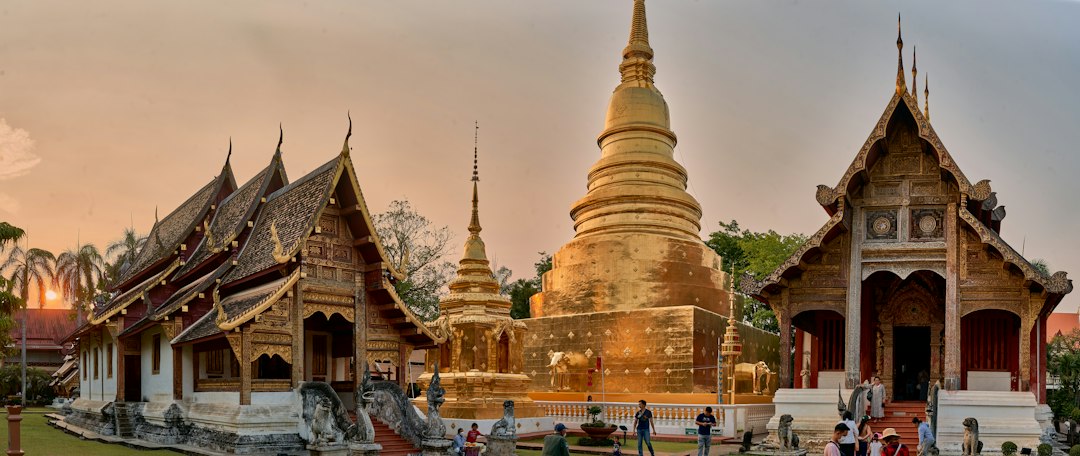
Begin with the old city’s historic temples and the role they play in northern Thai Buddhist life. Wat Chedi Luang is a natural focal point, with architecture and religious spaces that reward context. Check local signage and active worship areas before photographing or entering. Nearby temples can add perspective, but don’t rush through five in one hour.
Choose a museum or locally guided historical walk if you want to understand Lanna culture, the city’s political history and why its old walls and streets are arranged as they are.
How to visit a temple respectfully
Wear suitable clothing, remove footwear where required, respect restrictions on access and photography, and do not disturb ceremonies. Buddhist images are religious objects, not props. Ask before photographing monks or worshippers, and avoid making a temple visit all about producing a dramatic social video.
Day 2: Doi Suthep and its mountain setting
Wat Phra That Doi Suthep is a well-known mountain temple west of the city. Because it is uphill and away from the old-city walking circuit, plan it as its own outing. Verify transport, access, stairs or alternatives, current conditions and weather before deciding whether to add nearby stops.
The elevation may feel cooler than central Chiang Mai at certain times, but conditions vary. Bring suitable clothing, water and enough time to descend without racing toward a fixed dinner booking.
Day 3: food, art and everyday Chiang Mai
Use the final day for a northern Thai meal, a craft activity, an art venue or a market operating on your actual visit dates. Khao soi is one of the region’s best-known noodle dishes, but explore according to dietary needs and your personal curiosity rather than assuming every famous shop is appropriate for every traveler.
Check whether a Sunday walking street or other market is running that day. These are schedule-dependent experiences, not guaranteed daily attractions. If your trip doesn’t coincide with the market, a daytime neighborhood and food circuit is still valuable.
Three-day itinerary overview
| Day | Main area | Best use of time |
|---|---|---|
| 1 | Old City | Temple history, architecture and walking |
| 2 | Doi Suthep | Mountain temple and scenery |
| 3 | City neighborhoods | Food, art, craft or a current market |
Smoke season: a decision, not a footnote
Air quality in northern Thailand can be seriously affected during seasonal burning periods. Check real-time air-quality readings and government health advice before deciding to visit, especially if you have asthma or other respiratory concerns. Don’t treat seasonal averages as predictions for a specific travel day.
If conditions are poor, limit outdoor exposure according to appropriate health advice, reconsider mountain activities and be prepared to adjust plans or dates. A trip is not more successful because you ignored environmental conditions to complete a checklist.
Getting around without unnecessary backtracking
Within the Old City, walking may suit many visitors, but heat, traffic and street crossings still matter. For Doi Suthep, choose transport with clear pickup, return and fare terms. If you rent a vehicle, verify license requirements, helmet or seatbelt rules, insurance and your actual confidence with the road conditions.
Responsible animal tourism
If offered elephant experiences, investigate welfare practices rather than relying on marketing labels such as “ethical.” Avoid activities involving forced performances or harmful handling, and research animal-welfare guidance before booking. It is perfectly reasonable to spend the time at a museum or cultural workshop instead.
Where to sleep
For three days, a convenient Old City or adjacent base may reduce transport friction, but choose the actual unit by noise, air-conditioning, access and evening return routes. A longer working stay demands stronger workspace and connectivity checks; our Bangkok versus Chiang Mai guideaddresses that different decision.
What to prepare
- Check temple opening and religious observance information.
- Verify Doi Suthep transport and weather.
- Research a current arts or market event for your date.
- Monitor air quality and any local alerts.
- Keep a modest emergency and transport contingency.
- Plan meals and rest breaks rather than overloading each day.
Bottom line
Chiang Mai is more meaningful when approached as a living cultural city. Give its heritage, mountain temple and local culture their own space, and allow weather and air quality to determine what is sensible.